The Rita is the wooden pole a stilt fisherman sits on in the surf. It looks simple, but choosing, shaping and planting it takes skill, strength and a deep knowledge of the reef.
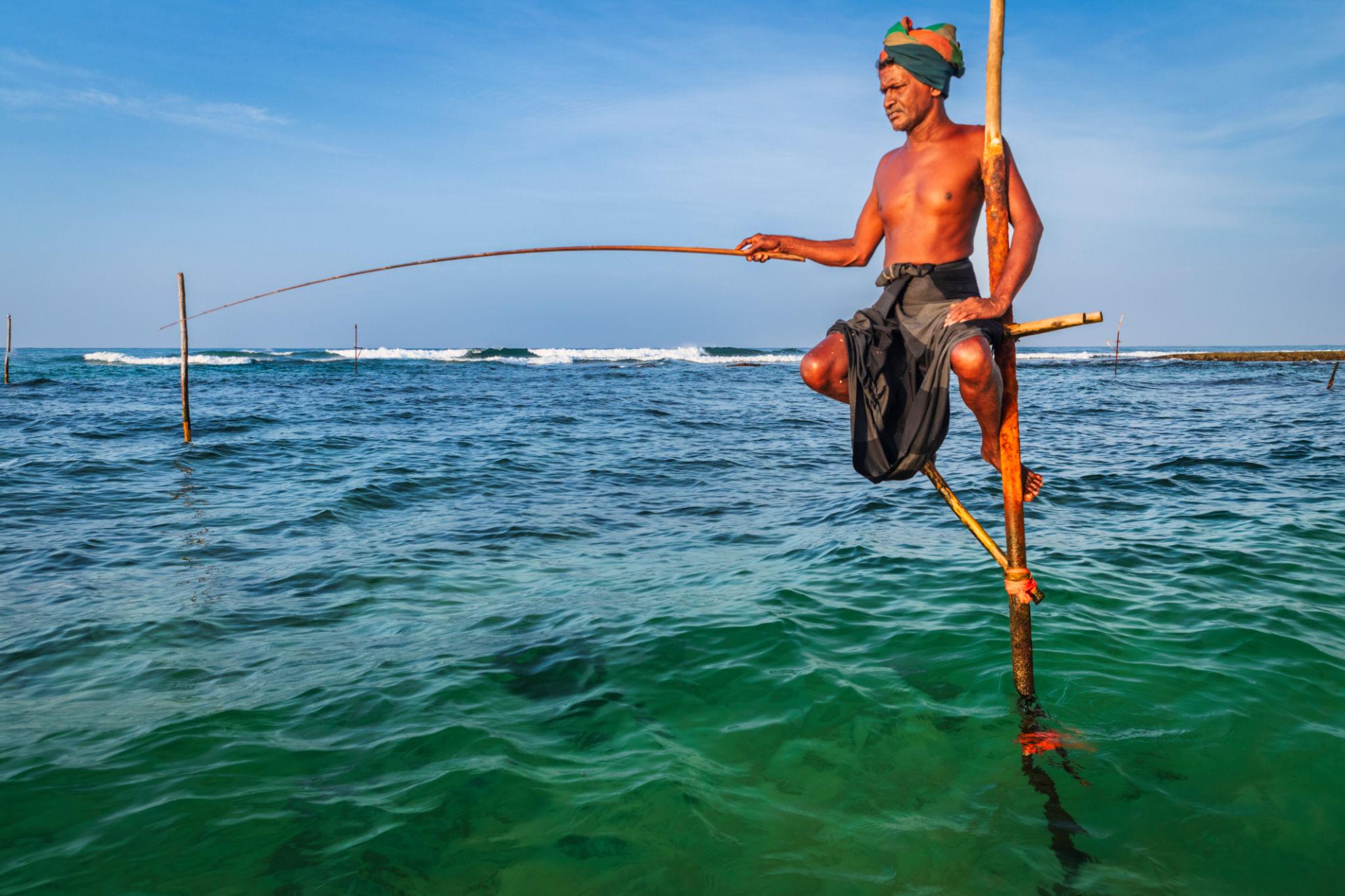
A Rita stilt pole on the reef at Koggala.
The Rita (රිට) is the traditional wooden stilt used by fishermen in Koggala, Maraduwawala and the Southern Province of Sri Lanka. It is planted firmly in the seabed on the reef, with a small seat tied to it about five feet above the water. From that seat the fisherman casts his line and waits, sometimes for hours, while the waves break around him.
For a fishing family the Rita is more than equipment. It stands at a fishing spot that has belonged to the family for generations, and the knowledge of the tides, the currents and the fish at that exact place is passed from father to son along with it.
Fishermen use wood from local trees such as Alstonia (ඇට්ටොනියා), which is easy to find. The wood must stand up to saltwater, insects and heavy waves.
The bark is cleaned off and the base is shaped with a knife. One end is sharpened and strengthened so that it stands firmly in the sand underwater.
The seat is made from four thin but strong poles fixed about five feet above the water. Two poles are tied at a right angle to form the main support, and the other two are tied at 45° to give extra balance and strength.
A skilled fisherman can also plant a Rita alone. He floats the pole out, ties a rope from the pole to his waist or foot, dives down, digs the seabed and fixes the pole in place. Many fishermen of earlier generations did the whole job by themselves.
| Height above water | 6–8 feet |
| Depth in the seabed | 3–5 feet |
| Diameter | 4–6 inches |
| Weight | 30–50 kg |
| Wood | Alstonia (ඇට්ටොනියා) and other local woods |
| Lifespan | 2–3 years or more with care |
The places where fishermen plant their Rita are not chosen at random. They are inherited through the bloodline of fishing families, and each fisherman has a recognised spot where he may plant his pole. These spots have been recorded for a long time, and today the Divisional Secretariat keeps the records of the locations and the fishermen who use them. It is a system of tradition and respect that keeps the fishing fair.
That is also why stilt fishing cannot happen just anywhere: the fish come only to these traditional places on the reef. Read more in Is stilt fishing real or fake?
Visit our fishing family in Koggala. We show you the Rita, the Piththa and the Bilikatuwa up close, explain how each is made, and, when the sea allows, let you sit on a stilt yourself.
Book on WhatsApp See experiences and pricesThe Rita (රිට) is the wooden stilt pole a stilt fisherman sits on. It is planted in the reef with a small seat about five feet above the water.
At low tide the fishermen dig into the reef with iron bars and hammer the pole several feet into the seabed. A skilled fisherman can also do it alone by diving with a rope tied between the pole and his waist.
Around two to three years or more with care, before it has to be replaced.
No. Each fishing spot is inherited within fishing families and recorded by the Divisional Secretariat. A fisherman plants his Rita only at his own recognised spot.
New to stilt fishing? Start with our visitor guide and is stilt fishing real or fake?
